
Skip to content
PS&M

Industries · 07

Public service, protected

A municipality runs a dozen industries at once — utilities, construction, fleet maintenance, parks, and offices — across scattered sites, on public budgets, under public accountability. PS&M builds municipal safety programs department by department, so every crew gets protection built for its actual work and the agency gets one defensible, consistent standard.

What does a municipal safety consultant do?

Builds one coherent safety program across radically different operations: confined space entry for water and wastewater, trenching and excavation for utility crews, work zone traffic control for road crews, shop safety for fleet, and office ergonomics for administration — with documentation that protects the agency in audits, claims, and after critical events.

Training by department, not by template

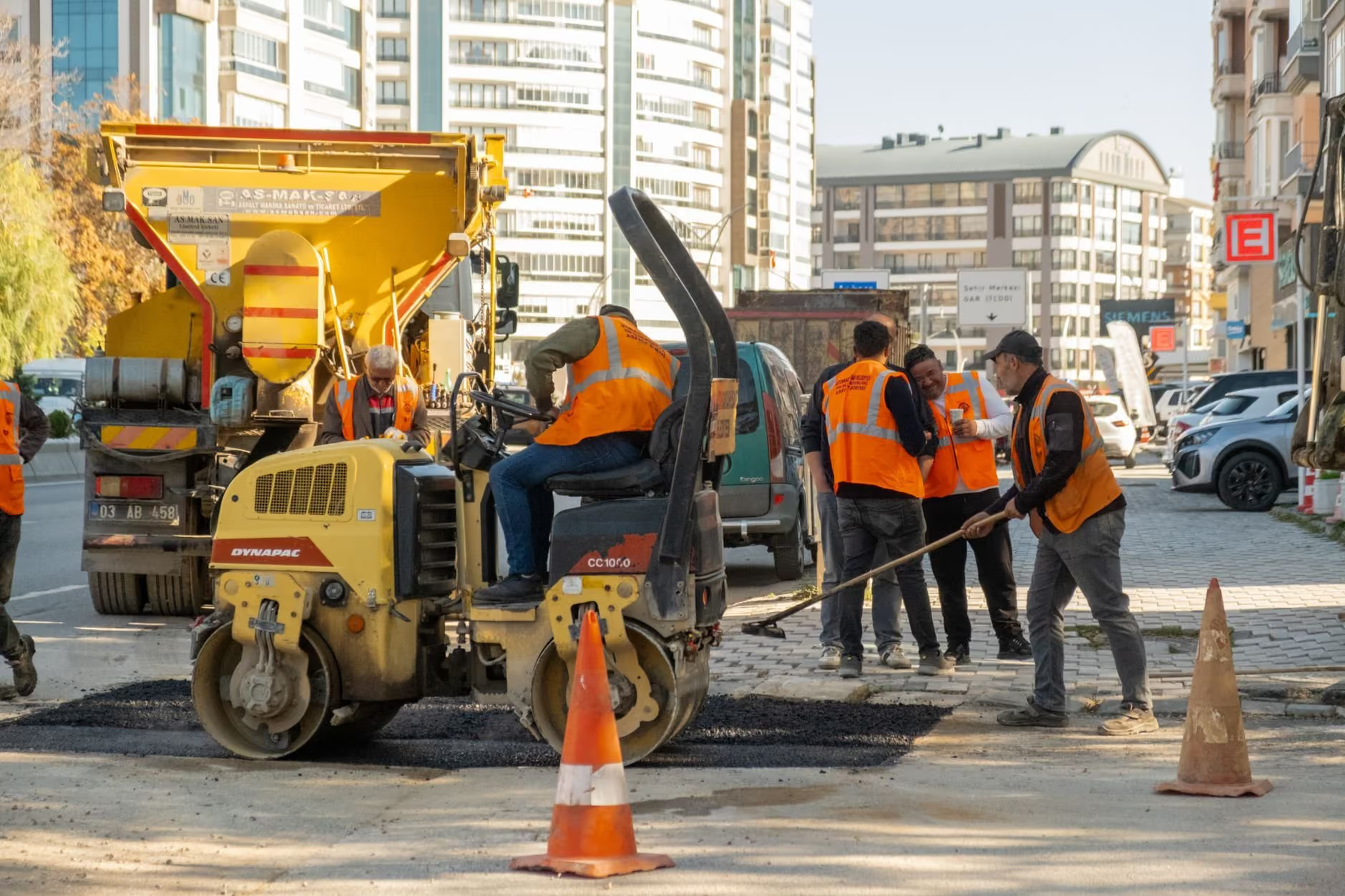
  • Public works: fall protection, trenching and excavation, heavy equipment, roadway work zone safety
  • Water & wastewater: confined space entry and rescue planning, chemical handling, lockout/tagout for treatment and pumping equipment
  • Fleet & vehicle maintenance: shop safety, hazard communication, PPE, hot work permits
  • Parks & recreation: tree work and landscaping safety, pesticide handling, outdoor exposure controls
  • Administrative staff: office ergonomics, slip/trip/fall prevention, and emergency response

Consulting for public agencies

Safety audits for garages, treatment plants, warehouses, and public works facilities; site- and task-specific risk assessments; high-risk hazard management for confined spaces, electrical work, and hot work; and written policies and SOPs consistent across departments.

Field-level support

Safety managers overseeing programs across departments, site safety officers for road crews and plant operations, and temporary coverage for construction programs, special events, and staffing transitions — so oversight holds without overloading internal teams.

Public accountability makes prevention cheaper than explanation. Request a consultation — we understand how agencies buy, budget, and answer to councils.

How we help here

FAQ

Questions we hear

Which municipal departments carry the highest safety risk?

Public works and water/wastewater lead consistently — trenching, confined spaces in vaults and lift stations, roadway work zones, and chemical handling concentrate the fatal-risk categories. Fleet shops and parks operations follow with hot work, equipment, and tree-work exposures. We prioritize assessments by consequence, not by department size.

Does OSHA apply to municipal employees?

It depends on the state. State-plan states — including California, where Cal/OSHA covers public employers fully — extend workplace safety requirements to municipal workers; federal-OSHA states vary, though many adopt equivalent public-employee programs. Either way, the tort, insurance, and public-trust consequences of a preventable injury don't check jurisdiction first.

Can you train around service schedules and tight budgets?

Yes. Training is scheduled around service delivery — early shifts for sanitation, split sessions for water plants — and scoped to budget cycles. Municipalities rarely need everything at once; we sequence the program so the highest-consequence gaps close first and each budget year buys visible progress.

Do you help with safety committees and policy development?

Both. We form and train safety committees that actually function, and develop written policies, hazard communication programs, and SOPs that apply across departments while respecting how each one works. Documentation is built to stand up in audits, claims, and council questions alike.

Start the conversation

Put a rigorous safety partner on your side

We respond within one business day — same day for citations and incidents.