
Skip to content
PS&M

Industries · 05

Throughput is a safety outcome

Every incident in a distribution center is a throughput event — a blocked aisle, a down forklift, an open claim, a crew short one picker in peak week. PS&M builds warehouse safety programs around your actual traffic patterns, rack profile, and volume cycles, so protecting people and protecting service levels become the same project.

What does a warehouse safety consultant deliver?

Control of the four systems that generate nearly every DC incident: powered industrial trucks, docks, racking, and people moving through all three. PS&M audits the facility as it actually runs — waves, surges, and third shift included — then builds the written programs, training, and inspection routines that hold at volume.

Training for warehouse and logistics teams

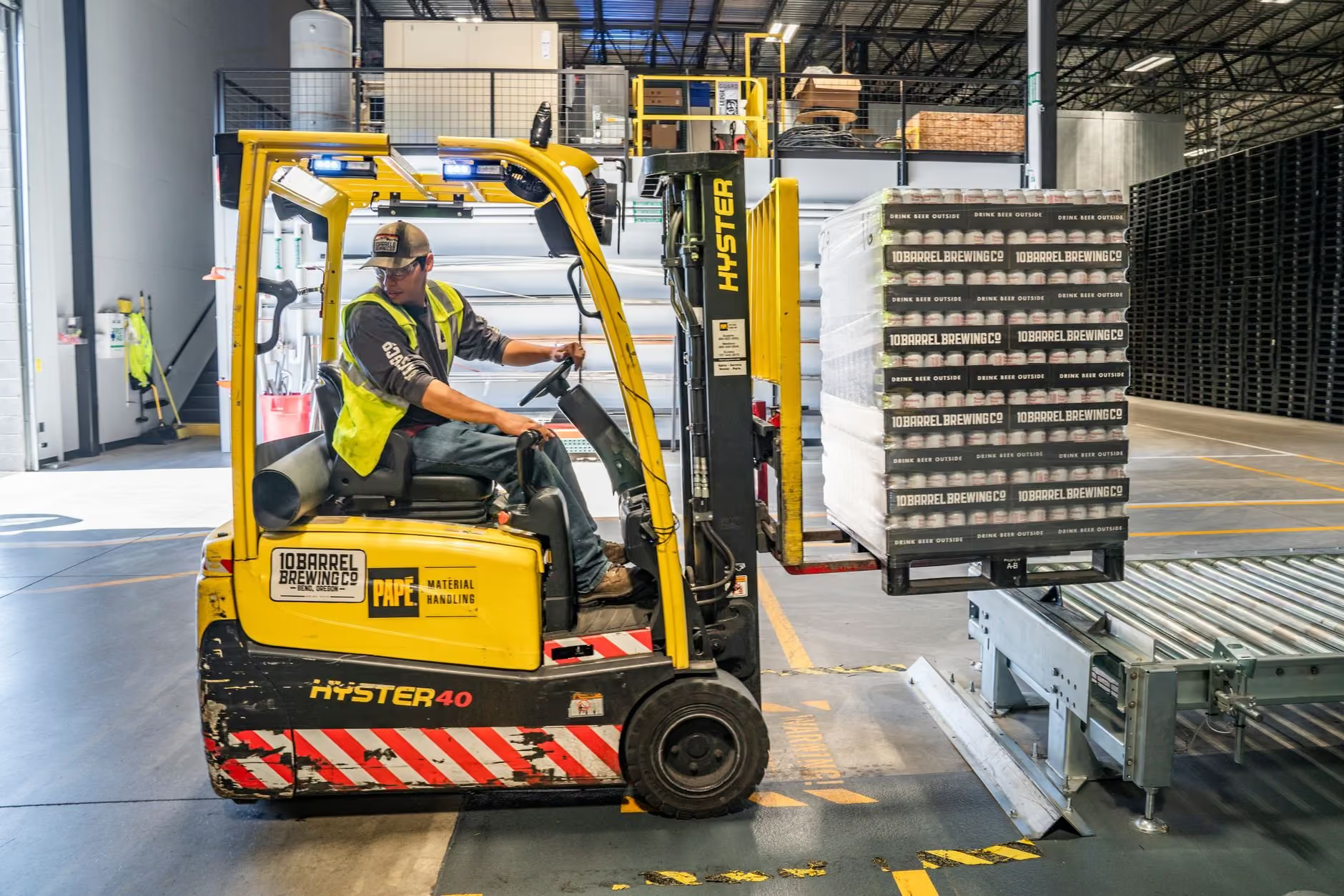
  • Forklift and PIT certification — initial, three-year evaluations, and post-incident refreshers under 1910.178
  • Loading dock and conveyor safety — dock plates, trailer restraint, struck-by prevention at the edge, and lockout expectations for jams
  • Ergonomics and back injury prevention for picking, palletizing, and push-pull work
  • PPE and hazard communication for batteries, cleaners, and charging areas
  • Emergency response and evacuation drills mapped to your layout
  • Site-specific orientation for new hires and the temp labor that peak season brings

Consulting for DCs, fulfillment, and 3PL

Facility safety audits against general industry requirements, material handling and storage reviews, pedestrian/vehicle separation design, machine guarding and LOTO for maintenance areas, and safety committee development that keeps improvement running between our visits.

Coverage that scales with volume

Long-term safety leadership, site safety officers for peak and high-risk facilities, and temporary safety staff for start-ups, expansions, and season — so oversight keeps pace with demand.

Peak is coming either way. Get the program ready first.

How we help here

FAQ

Questions we hear

What drives most warehouse injuries — and what fixes it?

Powered industrial trucks and manual handling dominate both the injury counts and the claims dollars. The fixes are unglamorous and effective — real operator certification under OSHA 1910.178, enforced pedestrian separation, dock discipline with trailer restraint, and ergonomics for the repetitive lifts your pick rates depend on.

Does forklift certification have to be renewed?

OSHA requires evaluation of each operator at least every three years, plus refresher training after any incident, near miss, observed unsafe operation, or equipment change. We run initial certification, the three-year evaluations, and the refreshers — documented so an inspector or customer auditor can see the program working.

Can you work around peak season?

We are built for it. Training splits across shifts, audits schedule around wave times, and when volume spikes bring surge staffing and higher risk, we provide temporary safety coverage so oversight scales with headcount instead of lagging it.

Do you inspect racking and dock equipment?

We evaluate racking condition, load practices, and damage patterns, dock plate and trailer restraint practices, and conveyor guarding — and we build the inspection and reporting routines your own team runs afterward, so findings become habits instead of one-time reports.

Start the conversation

Put a rigorous safety partner on your side

We respond within one business day — same day for citations and incidents.