
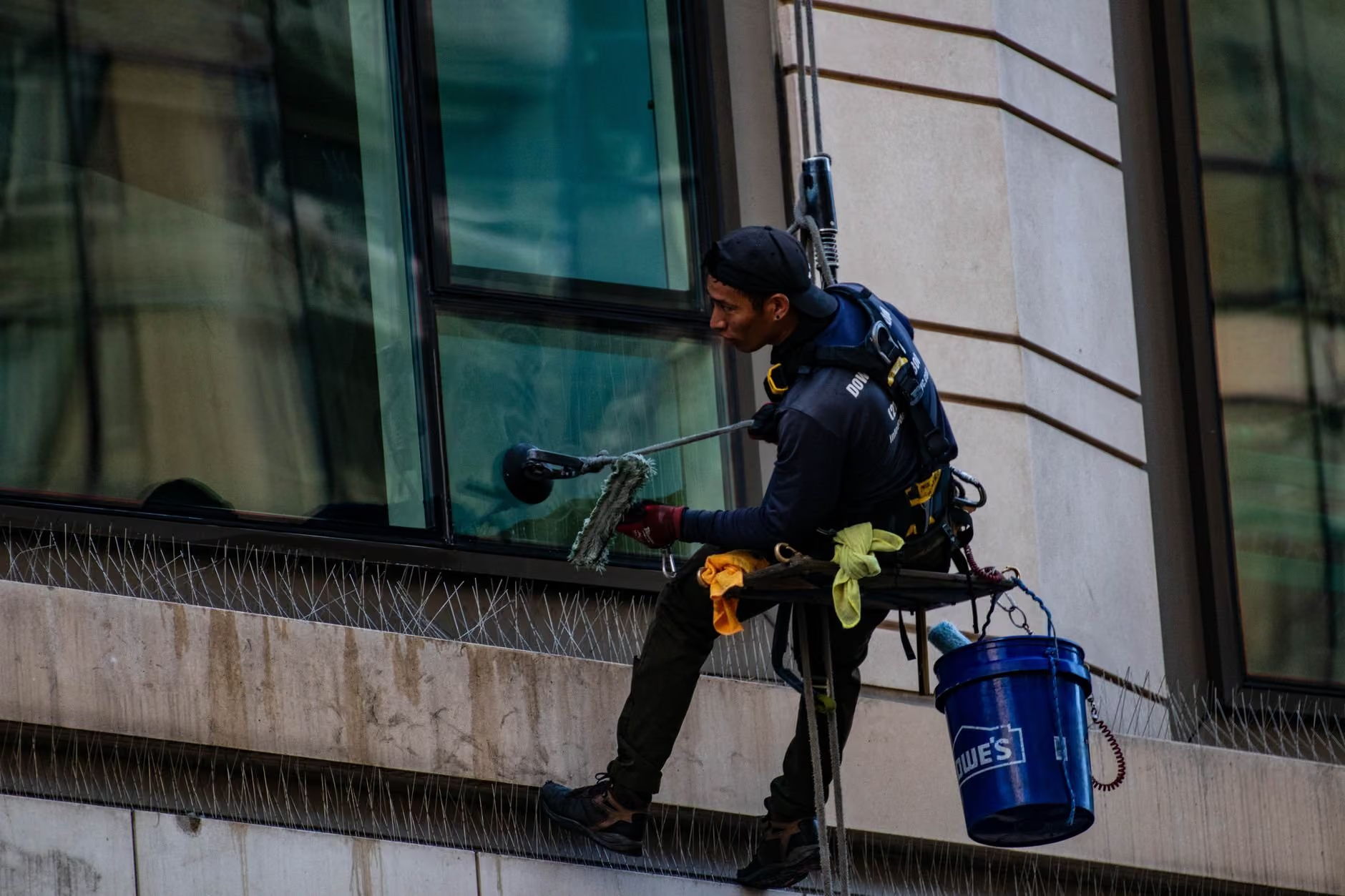
What the training covers
PS&M trains crews on the full fall protection toolkit, in the order OSHA expects you to use it:
- Fall hazard identification — leading edges, holes, skylights, ramps, and work over dangerous equipment
- Guardrail systems — the passive protection that takes the human factor out of the equation
- Personal fall arrest systems (PFAS) — anchorage, body harness, connectors, clearance calculations, and the fit that decides whether a fall is an incident or a fatality
- Safety net systems — where they apply and how they must be installed and maintained
- Ladder safety — selection, inspection, setup, and the habits that prevent the most common falls
- Equipment inspection and care — because a frayed lanyard protects no one
Everything maps to the standard. 29 CFR 1926.501 sets the duty, 1926.502 sets the system criteria, 1926.503 sets the training requirement. General industry crews train to 29 CFR 1910 Subpart D for walking-working surfaces.
Who needs fall protection training?
Every employee who might be exposed to fall hazards. That is not our language — it is 29 CFR 1926.503, which requires employers to provide a training program for each exposed worker, delivered by a competent person, and to certify that training in writing. General industry employers carry parallel duties under 29 CFR 1910 Subpart D.
The stakes are not abstract. Falls are the leading cause of fatalities in construction, and fall protection violations rank among the most-cited OSHA standards in general industry year after year. An untrained worker at height is a serious injury, a citation, and a liability case waiting on the same trigger.
Taught on your site, built from your hazards
We deliver instructor-led fall protection training at your facility or jobsite, tailored to the work your crews actually do — never from boilerplate. New hires get the foundation. Experienced crews get sharpened. Foremen and supervisors can train to the competent person level, with the inspection skills and authority the standard demands. Crews working from elevated platforms should pair this course with scaffold safety training — the hazards overlap, and the standards do not forgive gaps.
Need flexibility? An online option runs approximately two hours, is recognized by the International Competency Assessment Board (I-CAB), and includes a printable student manual.
Records that hold up under inspection
Every trainee finishes with a certificate of completion, and your training records finish documented, dated, and defensible — the written certification 1926.503 requires and the first thing a compliance officer asks for. If the rest of your program needs the same rigor, our OSHA compliance consulting closes the gaps before an inspector finds them.
Request a quote or call 213.290.3013. Tell us the work, the heights, and the headcount — we will build the class around them.