
What the training covers
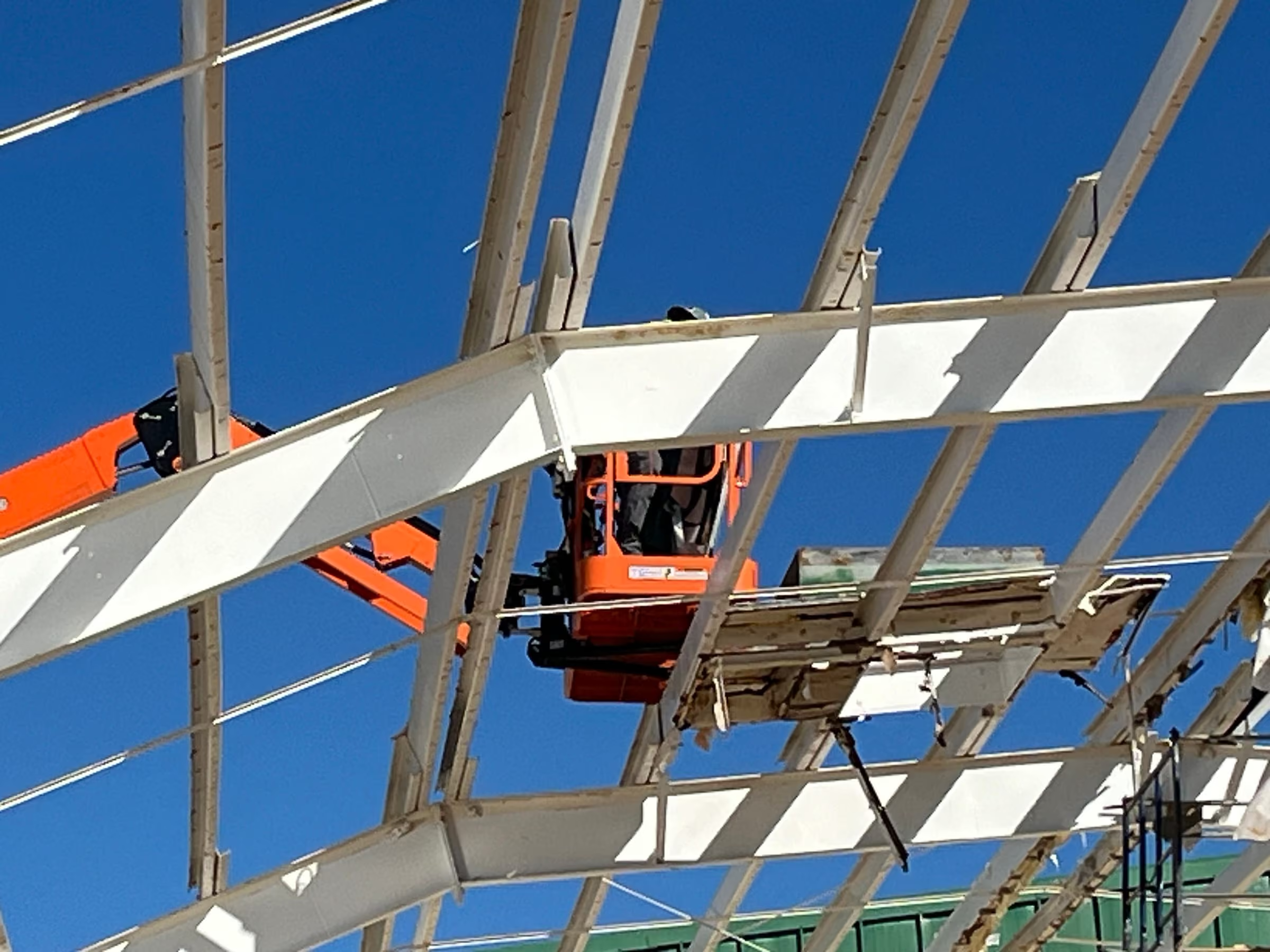
Mobile elevating work platforms earn their keep by putting workers exactly where the work is — and they punish shortcuts with tip-overs, falls, electrocutions, and caught-between injuries. The curriculum covers what keeps operators out of that data:
- Pre-use inspection — controls, safety devices, and structural condition, checked before the platform ever rises
- Load and stability — rated capacity, ground conditions, wind, and the physics that put machines on their side
- Safe travel and positioning — drive paths, drop-offs, floor openings, overhead obstructions, and power line clearances
- Fall protection requirements — when guardrails are enough and when the standard demands tie-off, as it does in boom lifts
- Hazard recognition — reading the site, not just the machine
Everything maps to the standards. ANSI/SAIA A92.22 governs safe use, A92.24 governs training, and OSHA enforces through 29 CFR 1926.453 for boom-supported aerial lifts, 29 CFR 1910.67 in general industry, and the scaffold rules at 29 CFR 1926.452(w) for scissor lifts.
Who needs MEWP operator training?
Every worker who operates a boom lift, scissor lift, or any other mobile elevating work platform. OSHA allows only trained, authorized personnel to operate aerial lifts under 29 CFR 1926.453, and ANSI/SAIA A92.24 sets the training requirements — for operators, and for the occupants and supervisors working around them. No current training means no hands on the controls.
The stakes are not theoretical. Improper MEWP use is a consistent source of serious injuries and fatalities, and an untrained operator is an incident, a citation, and a liability case waiting on the same trigger.
Certification expires. Your operators should not.
MEWP operator certification expires every 3 years. PS&M delivers refresher training that keeps operators current, compliant, and qualified — and keeps your records ready when a compliance officer or a general contractor’s prequalification reviewer asks who is authorized on which machines. Documented, dated, and defensible.
On your site, on your machines
We train where your operators work — construction sites, industrial plants, and facilities maintenance operations — and build each class around the specific equipment types at your facility or jobsite, never from boilerplate. Operators in boom lift platforms live in a harness, so pair this course with fall protection training to make the tie-off discipline match the operating discipline. And if aerial lift exposure is one gap among several, our OSHA compliance consulting finds the rest before an inspector does.
Request a quote or call 213.290.3013. Tell us your machines, your sites, and your headcount — we will build the class around them.